Keeping a British Shorthair in an HDB flat: rules, licensing and setup
For decades, cats were officially not allowed in HDB flats — a rule honoured mostly in the breach. That changed with Singapore’s Cat Management Framework: since 1 September 2024, cats are legally allowed in HDB flats, with licensing and microchipping required. For anyone considering a British Shorthair — arguably the best-suited pedigree breed for flat living — this is the guide to doing it properly: the rules, the licensing steps, the deadline that matters in 2026, and how to set up your flat.
The rules in brief
Under the framework, HDB residents may keep up to two cats per flat (private residences may keep up to three cats and/or dogs). Every pet cat must be microchipped and licensed through the Animal & Veterinary Service (AVS) — licensing is handled by AVS via its online Pet Animal Licensing System (PALS), not by HDB. Cats must be kept indoors and under control; free roaming is not permitted, and owners are expected to prevent nuisance to neighbours.
Licensing, step by step
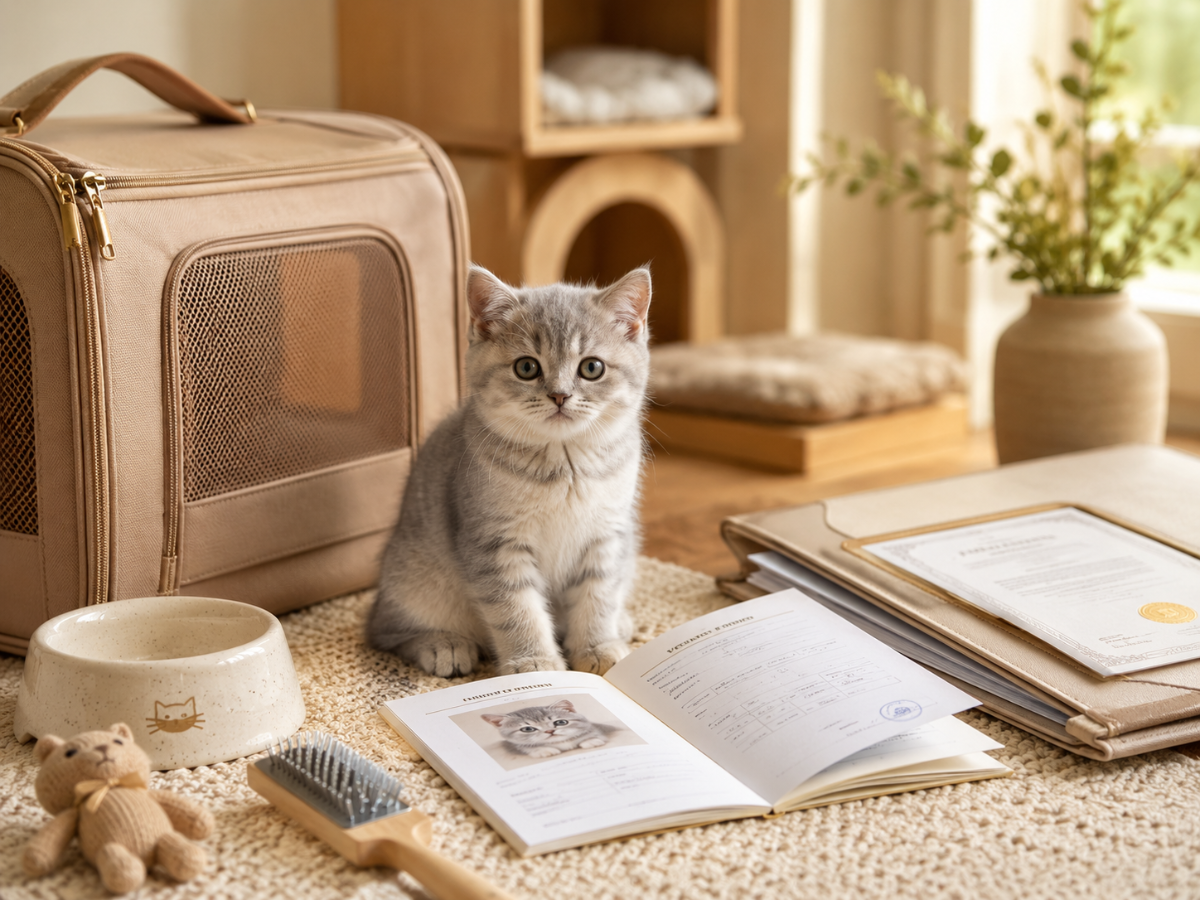
- Microchip first. Your cat must be microchipped before you can apply — every Meowtelier kitten goes home already microchipped, so this step is done for you.
- Complete the free pet ownership course. First-time owners take a one-time online course on responsible cat ownership (roughly 30 minutes) before applying.
- Apply on PALS. Submit the licence application at pals.avs.gov.sg with your SingPass, microchip number and course certificate.
- Sterilised cats get a one-time licence. Licences for sterilised cats do not need renewal; unsterilised cats receive time-limited licences with renewal fees.
The deadline: 31 August 2026
The framework opened with a two-year transition period, from 1 September 2024 to 31 August 2026, during which licensing is free. From 1 September 2026, keeping an unlicensed pet cat becomes an offence, with fines of up to S$5,000. If you are bringing a kitten home in 2026, license it promptly — there is no reason to wait, and during the transition it costs nothing. If you already keep more than two cats from before September 2024, licensing them before the deadline is also what preserves your right to keep them all.
Why the British Shorthair suits HDB life
Not every breed thrives in a flat. The British Shorthair does, almost by design: it is quiet (rarely vocal), calm and undemanding of space, content to live entirely indoors, and independent enough to handle working-hours households without distress. It is not a curtain-climber or a door-dasher. Neighbour complaints — the historical reason for the HDB cat ban — are about noise and roaming, and the BSH is naturally disinclined to both. Read our full British Shorthair breed guide for the complete temperament picture.
Setting up the flat
The single most important safety measure in high-rise Singapore is meshing your windows. Cats fall from unsecured windows far more often than owners expect — even placid indoor cats — so fit mesh or grilles with gaps small enough that a determined cat cannot squeeze through, and check service-yard windows and balcony access too. Beyond that, the setup is simple: a large open litter tray in a low-traffic corner, scratching posts to protect furniture, a cat tree or shelf by a window for supervised world-watching, and cool resting spots — tiles, shaded corners, or the air-conditioned room during the hottest hours. Our guide to settling your kitten in covers the first two weeks in detail.
Being a good neighbour
The framework works because owners keep it working. Keep your cat inside the flat, scoop the litter daily so corridors never smell, and use a carrier in lifts and common areas. British Shorthairs make this easy — most neighbours will never know the cat exists — but the habits matter, because responsible ownership is what keeps HDB living cat-friendly for everyone.
Buying legally: start with a licensed cattery
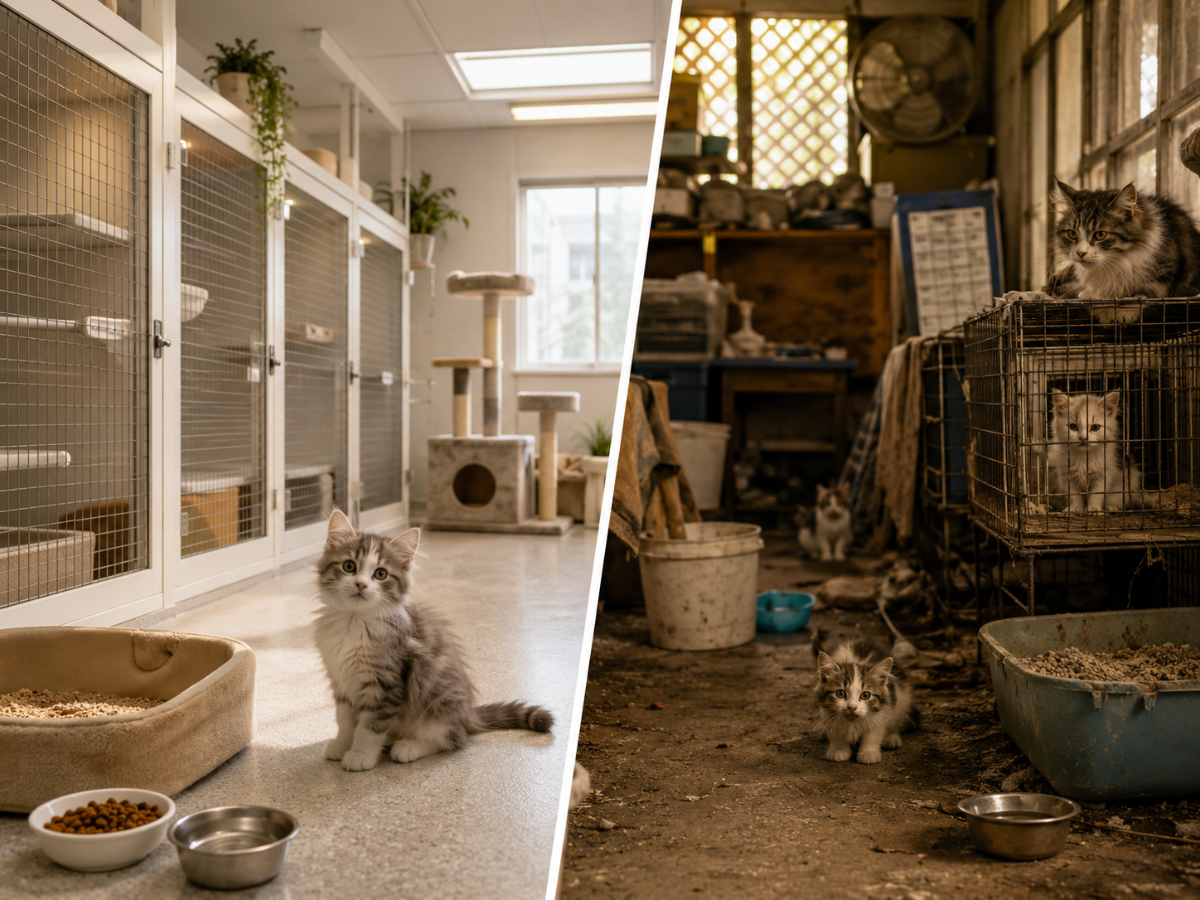
Licensing applies to sellers too: anyone breeding or selling cats in Singapore must be AVS-licensed. Buying from a licensed cattery (our licence is AS26D00023) means your kitten arrives microchipped, vaccinated, vet-checked and with the paperwork PALS will ask for — the licensing process becomes a formality rather than a scramble. See licensed cattery vs backyard breeder for why this matters, or browse our available British Shorthair kittens.
Frequently asked questions
Are cats allowed in HDB flats in Singapore?
How do I license my cat in Singapore?
What happens if I don’t license my cat by 31 August 2026?
Is the British Shorthair a good breed for an HDB flat?
Looking for a British Shorthair in Singapore?
Book a private viewing at our AVS-licensed cattery — we're happy to walk you through paperwork, health records and temperament.