Caring for a British Shorthair in Singapore’s climate
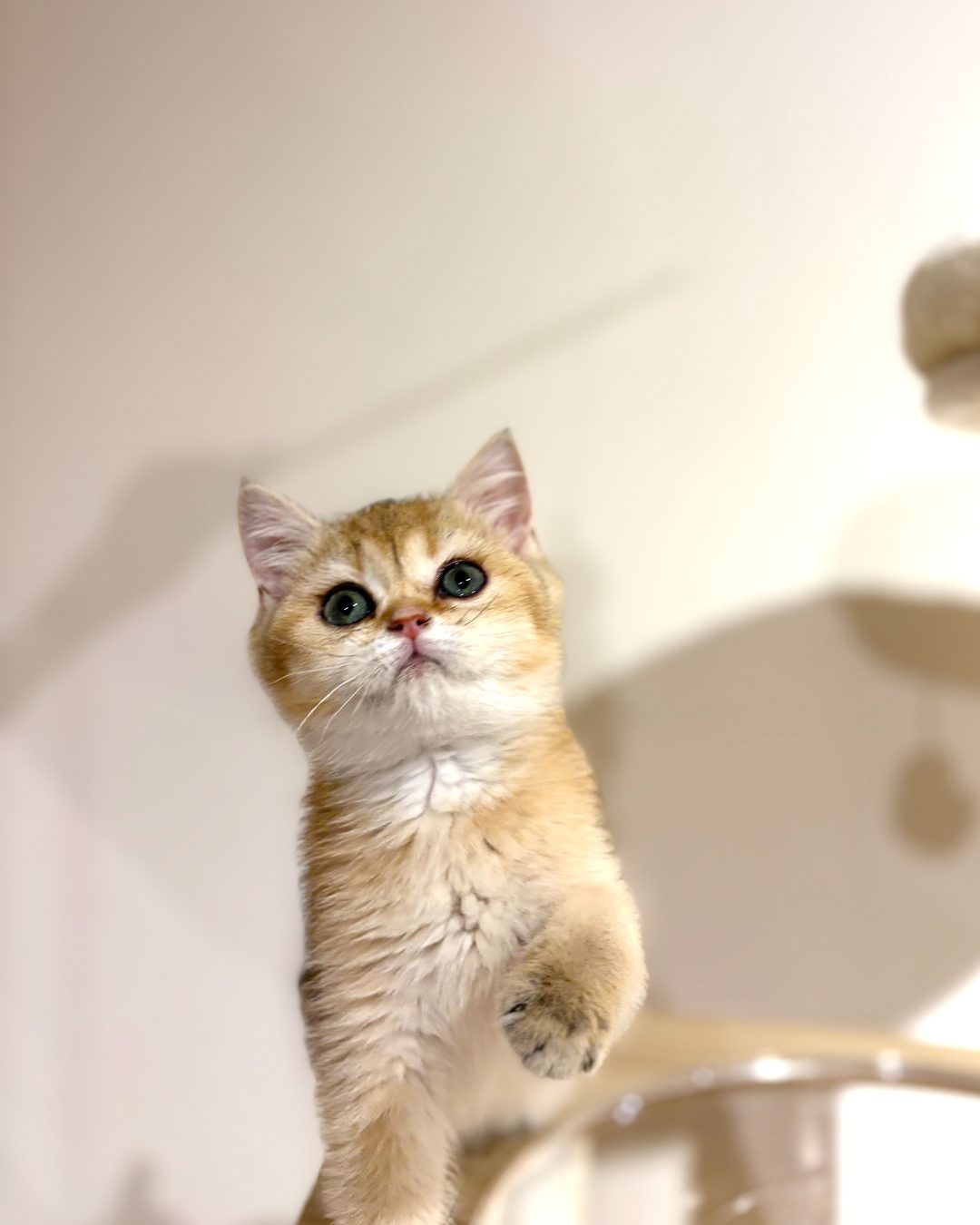
The British Shorthair was bred for the British climate — dense double coat, sturdy build, a body designed to hold warmth. Singapore is thirty-one degrees and humid all year. New owners often ask whether the breed can be comfortable here at all. The answer is a clear yes: thousands of British Shorthairs thrive in Singapore homes. But the tropics do change how you care for one, from grooming rhythm to feeding to how you set up the flat. Here is what a decade of raising British breeds in Singapore has taught us.
A dense coat in the tropics
An indoor British Shorthair in Singapore does not need air-conditioning around the clock, but it does need ways to shed heat: tiled floors to sprawl on, shaded corners, good airflow from a fan, and fresh water always available. Most owners find their BSH gravitates to the coolest surface in the flat and self-regulates well. During the hottest stretch of the day, an air-conditioned room is a kindness the breed visibly appreciates — you will often find them belly-down on the cool floor beneath the vent. What they must never have is an enclosed, unventilated space in the afternoon heat.
Shedding: year-round, not seasonal
In temperate countries the BSH sheds heavily twice a year. In Singapore’s seasonless climate, most shed moderately all year round instead, with the undercoat turning over continuously. This makes a steady grooming rhythm more useful than an intensive seasonal one: a thorough brush once or twice a week with a slicker or fine comb lifts the loose undercoat before it ends up on your sofa — or in your cat’s stomach as hairballs. Five minutes, twice a week, is genuinely all the coat asks.
Skip the bath, mind the ears
British Shorthairs rarely need bathing — the coat’s crisp texture is self-maintaining, and frequent washing strips it. Reserve baths for genuine messes. Humidity does make two small checks worth adding to your routine: look inside the ears weekly (warm, humid climates raise the chance of yeast build-up) and keep an eye on skin folds and chin for acne, especially if you use plastic food bowls. Ceramic or steel bowls, washed daily, prevent most of it.
Diet and the weight question
The single biggest health risk for a British Shorthair in Singapore is not the heat — it is weight. The breed is stocky by design, food-motivated, and living the low-exertion indoor life of a Singapore flat cat. Extra weight hides easily under the plush coat, so owners routinely miss it until the vet points it out. Feed measured portions rather than free-feeding, favour high-protein food with wet food in the rotation, and learn to check body condition by feel: you should find the ribs easily under a thin layer of padding. A BSH at healthy weight lives years longer and moves like a different cat.
Hydration matters more here
Cats are famously poor drinkers, and in a warm climate that matters more. Wet food is the easiest fix — it carries most of the water your cat needs. Many British Shorthairs also take well to a water fountain, and placing water bowls away from food (cats prefer it) helps too. Good hydration supports the kidneys for life, which is worth taking seriously in a breed where responsible catteries already screen parents for PKD. Our health & guarantees page covers the screening every Meowtelier parent undergoes.
Enrichment for the indoor life
The BSH is not a high-energy breed, but calm is not the same as inert. Ten minutes of wand-toy play a day — ideally in the cooler morning or evening — keeps weight down and instincts satisfied. Add a scratching post or two, a perch with a view of the window, and rotate a few toys rather than leaving all of them out. That modest routine is the entire enrichment budget the breed requires; it is part of why they suit busy Singapore households so well.
Vet care in Singapore
Plan on an annual vet visit for boosters and a physical, moving to twice-yearly as your cat becomes a senior. Between visits, watch for the things a stoic breed hides: eating less, drinking more, breathing fast at rest. Every Meowtelier kitten goes home vaccinated, microchipped and vet-checked, with 1 year of health insurance including outpatient cover and 10% off at our partner vet — the first year of care is largely arranged before your kitten arrives. For choosing a kitten with the right health foundations in the first place, start with what to know before buying.
Signs of overheating
True overheating is rare in an indoor cat with water and shade, but know the signs: open-mouth panting, drooling, lethargy and a body that feels hot to the touch. If you see them, move the cat to an air-conditioned room, offer water, wet the paws and ears, and call your vet. Prevention is simple — never confine a cat in an unventilated room, car or carrier in the heat.
Frequently asked questions
Can British Shorthairs live comfortably in Singapore’s climate?
Do British Shorthairs shed a lot in Singapore?
What should I feed a British Shorthair in Singapore?
How often should a British Shorthair see a vet?
Looking for a British Shorthair in Singapore?
Book a private viewing at our AVS-licensed cattery — we're happy to walk you through paperwork, health records and temperament.